

Hey there! As a supplier of Hospital Lifts, I've been getting a lot of questions lately about how our lifts ensure patient privacy. It's a super important topic, especially in a hospital setting where patients' well - being and confidentiality are top priorities. So, let's dive right in and explore this together.
Design Features for Privacy
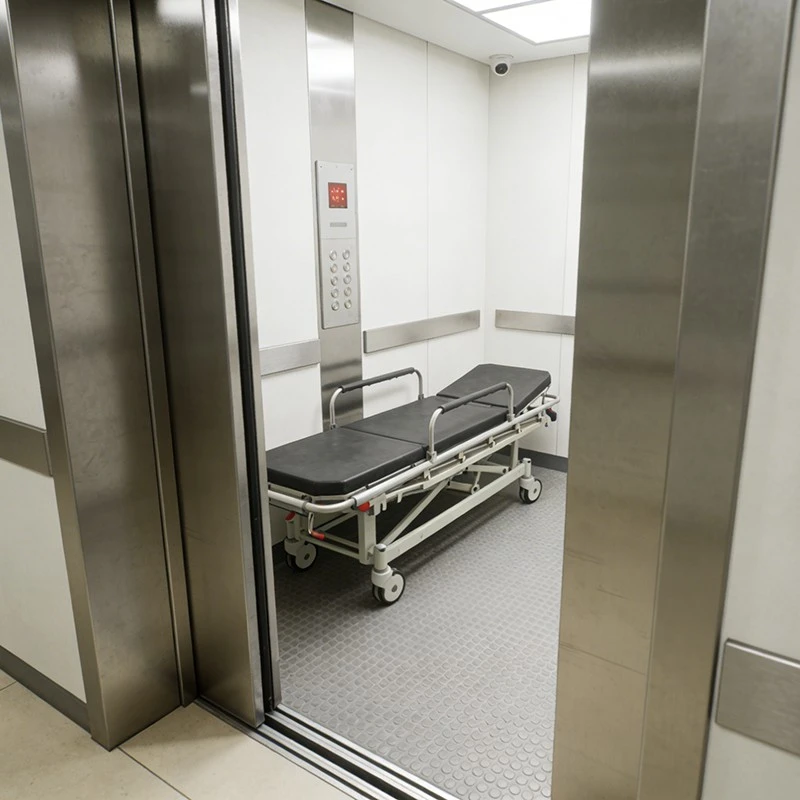
First off, our Hospital Lift is designed with several features that directly contribute to patient privacy. One of the key aspects is the layout of the lift cabin. We've made sure that the cabin is spacious enough to accommodate stretchers, beds, and medical equipment without overcrowding. This means that when a patient is being transported, there's enough room for medical staff to attend to them without having to squeeze in other passengers.
For example, our Stretcher Elevator has a large, open - plan design. The dimensions are carefully calculated to allow for easy maneuvering of stretchers. This not only makes it more comfortable for the patient but also reduces the chances of other people getting too close and potentially invading the patient's privacy.
Another design element is the use of opaque glass or partitions. In some of our Hospital Pattern Elevator models, we install opaque glass on the sides of the cabin. This prevents people outside the lift from seeing inside, giving the patient a sense of seclusion. The partitions can also be adjusted or customized according to the hospital's specific needs. Some hospitals might prefer a more open - feel with just a partial partition, while others might opt for full - length opaque barriers.
Security and Access Control
Security is a huge part of ensuring patient privacy. Our Medical Elevator comes with advanced access control systems. This means that only authorized personnel can access certain floors or use the lift during specific times. For instance, if a patient is being transported to a private ward, the lift can be programmed to only stop at that particular floor.
We use a combination of key cards, biometric scanners, and PIN codes for access control. Medical staff are issued with unique key cards or have their biometric data registered. This way, we can track who is using the lift and when. It also prevents unauthorized people from getting into the lift and potentially disturbing the patient.
In addition to access control, we also have surveillance systems in place. But don't worry, these are used mainly for security purposes and not to invade the patient's privacy. The cameras are placed in a way that they can monitor the entrance and exit of the lift, but they don't have a direct view of the patient inside the cabin. The footage is stored securely and can only be accessed by authorized security personnel in case of an emergency.
Noise Reduction
Noise can be a big factor when it comes to patient privacy. No one wants to have their private conversations or medical discussions overheard in a noisy lift. That's why our Bed Elevator In Hospital is designed with noise - reduction technology.
We use high - quality insulation materials in the lift cabin to block out external noise. The motors and mechanical parts are also designed to operate quietly. This creates a peaceful environment inside the lift, allowing patients and medical staff to have private conversations without the fear of being heard by others.

Staff Training
It's not just about the technology and design; our staff training also plays a crucial role in ensuring patient privacy. We provide comprehensive training to all the hospital staff who will be using our lifts. They are taught about the importance of patient privacy and how to handle situations where privacy might be at risk.
For example, they are trained to close the lift doors quickly and securely when a patient is inside. They are also instructed not to discuss the patient's condition or personal information while in the lift. This helps to maintain a high level of privacy for the patients.
Customization for Different Needs
We understand that different hospitals have different privacy requirements. That's why we offer a high degree of customization for our hospital lifts. Whether it's a small community hospital or a large teaching hospital, we can tailor the lift to meet their specific needs.
For a hospital that deals with a lot of high - profile patients, we can add extra security features such as encrypted communication systems and more advanced access control. For a hospital with a focus on pediatric patients, we can design the lift cabin to be more child - friendly while still maintaining privacy.
Conclusion
In conclusion, ensuring patient privacy in hospital lifts is a multi - faceted process. It involves careful design, advanced security systems, noise reduction, staff training, and customization. At our company, we take patient privacy very seriously, and we're constantly working to improve our products and services to meet the highest standards.
If you're a hospital administrator or in charge of purchasing medical equipment, and you're interested in learning more about our hospital lifts and how they can ensure patient privacy, we'd love to have a chat with you. Just reach out to us, and we can start the conversation about how our Hospital Lift can be a great fit for your hospital.
References
- Hospital elevator design and safety standards documents.
- Research on patient privacy in healthcare settings.
- Industry best practices for elevator security and access control.


