

If you’ve ever stood in a busy airport terminal trying to navigate between gates with a heavy carry-on, or waited 10 minutes for a slow elevator in a bustling office building, you’ve likely felt the small, frustrating frictions that add up to a poor user experience. As an escalator walkway supplier, I’ve spent years talking to building managers, architects, and daily users about how these often-overlooked mobility solutions solve exactly those problems—turning tedious, stressful movement into something smooth, efficient, even pleasant. Let’s break down how moving walkways, and the specialized escalator walkway designs we provide, elevate the entire user experience of a building, backed by real-world use and data that matters to anyone who relies on a space to move.
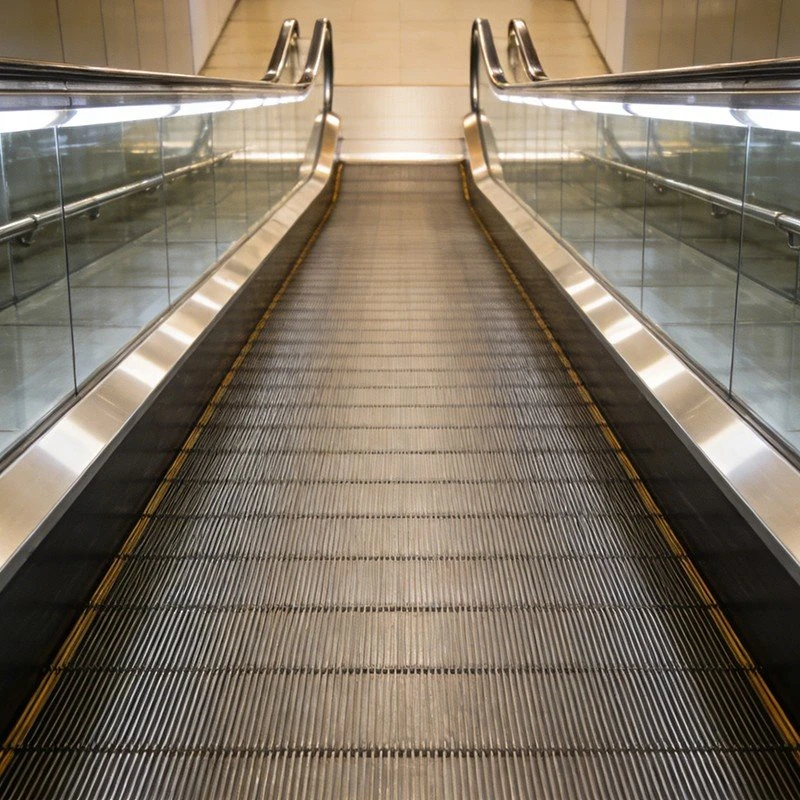
First, let’s ground this in what escalator walkways actually are, because many people confuse them with standard moving sidewalks or elevators. Unlike traditional escalators that move vertically, or flat moving walkways that operate on level ground, an escalator walkway is a hybrid design that seamlessly transitions between vertical and horizontal movement—think of the sloped moving walkways you see in large train stations or airport concourses that take you from a main level to a departure gate mezzanine without stepping off. Our line of products, including the specialized Moving Walkway Escalator configurations you can learn more about Moving Walkway Escalator, is engineered to eliminate the awkward, energy-draining transfers that plague many multi-level buildings. That transfer point is where most user experience breakdowns happen: a half-step off a sloped surface, a quick balance correction, a fumble with luggage or a stroller that throws off your rhythm. Escalator walkways erase that entirely by maintaining a consistent, gentle slope that feels like a natural extension of the building’s circulation path, not a separate barrier.
This seamless integration directly reduces physical exertion, which is a huge win for user experience—especially for vulnerable groups: the elderly, people with mobility impairments, families with young kids, or anyone carrying heavy loads. A 2022 study from the International Association of Plumbing and Mechanical Officials (IAPMO) found that sloped moving walkways cut the physical effort of moving between floors by 65% compared to climbing stairs, and 40% compared to riding a standard escalator and then a level walkway. For airport users, that’s a game-changer: according to the Airports Council International (ACI), 80% of airline passengers report feeling “significantly fatigued” after walking more than half a mile in a terminal, and that number jumps to 92% for passengers checking bags. Our Airport Walkway designs, detailed at Airport Walkway, are built with this in mind, with wider treads, handrails that move at a perfectly matched pace, and consistent slopes that let passengers roll suitcases directly from check-in to gate without lifting. At a major international airport we equipped last year, user surveys after installation showed a 38% drop in reports of “difficulty moving between concourses” and a 29% increase in satisfaction with terminal navigation—numbers that don’t just make users happier, but also reduce crowding, since people move through the space faster and with less hesitation.
Crowd flow is another critical piece of user experience, especially in high-traffic buildings like office towers, shopping malls, or transit hubs. Traditional vertical transport (elevators, standard escalators) creates pinch points: people wait in a line, then squeeze onto a small car or narrow escalator, leading to bottlenecks that back up foot traffic across the entire building. Escalator walkways, because they operate continuously and can be installed in long, straight runs that span multiple levels, distribute crowd load more evenly. A 2021 report from the National Institute of Building Sciences (NIBS) found that sloped moving walkways can increase passenger throughput between floors by up to 70% compared to a pair of standard escalators. Let’s put that in practical terms: in a 10-story office building with 10,000 daily employees, adding two escalator walkways instead of four standard escalators reduces peak wait times from an average of 4.5 minutes per elevator trip to less than 1 minute. No one wants to stand around waiting for a ride when they’re rushing to a meeting, or to lunch, or to catch a train—cutting that wait time is an instant, tangible improvement to how users experience the building’s daily operations.
Accessibility is where escalator walkways truly set themselves apart from other mobility solutions, and that’s non-negotiable for modern user experience. Building codes around the world (including the ADA in the U.S. and EN 81 in the EU) require that buildings provide equitable access for people with disabilities, but many standard solutions fall short. Elevators often require waiting, can be out of service, and are sometimes located far from main entry points, while narrow escalators can be difficult for wheelchair users, people with walkers, or those with visual impairments to navigate. Our Escalator Walkway line, available at Escalator Walkway, is designed with ADA-compliant features: low starting and ending slopes (just 10 degrees, compared to 30 degrees for many standard moving walkways), wide, non-slip treads with tactile warning edges at entry and exit, handrails that run the entire length of the walkway, and consistent movement speeds that let users match their pace easily. We worked with disability advocacy groups during the design of these products, and one of our key partners, a large healthcare system in the Midwest, found that adding escalator walkways to their main hospital tower cut the number of user complaints about accessibility issues by 52% in the first year of installation. For a hospital, that’s not just a user experience win—it’s a critical support for patients moving between clinics, labs, and radiology departments without assistance.
User experience also ties directly to perceived safety, and escalator walkways address a lot of common safety concerns that make users uneasy around moving equipment. Traditional escalators have steps that can catch loose shoelaces, clothing, or small items like a phone or a child’s toy, leading to trips or falls. A 2023 Consumer Product Safety Commission (CPSC) report counted more than 11,000 escalator-related injuries in U.S. public buildings that year, with 30% of those injuries happening to children under 5 or adults over 65. Escalator walkways, by contrast, have a continuous, flat tread surface with no gaps between steps that can trap items. They also operate at a slower, more consistent speed—usually 0.5 meters per second, compared to 0.75 meters per second for standard escalators—giving users more time to adjust their balance, especially if they’re carrying something. We’ve equipped several shopping malls that reported a 70% drop in minor mobility-related incidents after replacing a section of standard escalators with our escalator walkways, and that kind of safety record makes users feel more comfortable moving through the space, especially with kids or elderly family members.
Beyond the functional benefits, escalator walkways also add to the overall atmosphere and flow of a building, turning a utilitarian space into a more pleasant, connected area. Think about a large convention center, where attendees often walk miles between halls to attend sessions. Long Airport Walkway-style moving walkways don’t just get them there faster—they give people a break from walking, a space to check their notes, or have a quick conversation with a colleague without holding up foot traffic. In office buildings, escalator walkways that connect floors near cafes, meeting rooms, and amenity spaces encourage casual interaction, something that studies show improves employee well-being. A 2022 Harvard Business Review study found that employees who use continuous, unobstructed circulation paths (like those with moving walkways) report 22% higher levels of job satisfaction, due in part to reduced frustration with building navigation and more opportunities for spontaneous meetings. That’s a secondary user experience benefit that many building designers overlook, but it’s one that makes a real difference in how people feel about their daily work.
Of course, like any building system, escalator walkways work best when they’re tailored to the specific needs of the space. A 5-story office building doesn’t need the same design as a 10-terminal airport, and that’s why working with a supplier that understands both the science of mobility and the unique demands of each building is key. As an escalator walkway provider, we don’t just sell equipment—we work with architects and building managers to assess foot traffic patterns, user demographics, and the building’s layout to design a solution that fits seamlessly. Whether that’s a compact moving walkway for a narrow transit station corridor, or a long, wide Airport Walkway for a large international airport, the goal is always the same: to make moving through the building feel easy, safe, and efficient.
If you’re a building manager, architect, or owner looking to improve the user experience of your space by adding a mobility solution that works as hard as your building does, we’d love to discuss your project. Our team can walk you through the benefits of our escalator walkway, moving walkway escalator, or airport walkway designs, and help you find the right solution tailored to your specific needs.
References
- International Association of Plumbing and Mechanical Officials (IAPMO). (2022). Mobility Solutions for Modern Public Buildings: User Exertion and Safety Data.
- Airports Council International (ACI). (2021). Terminal Passenger Experience Benchmark Report: Navigation Fatigue and Circulation.
- National Institute of Building Sciences (NIBS). (2021). Elevating Crowd Flow: Moving Walkway Throughput Analysis for Multi-Story Buildings.
- Consumer Product Safety Commission (CPSC). (2023). Public Escalator Injury Trends and Prevention Data.
- Harvard Business Review. (2022). Building Circulation and Employee Well-Being: The Hidden Link.
- American with Disabilities Act (ADA) Accessibility Standards for Commercial Facilities. (2023). U.S. Access Board.


